Check Icon More than 150 years of experience
Check Icon Experts in flue gas and heat pumps
Check Icon Ease of installation & speed
Check Icon More than 2,000,000 homes supplied
Clearer instructions. More secure installation.

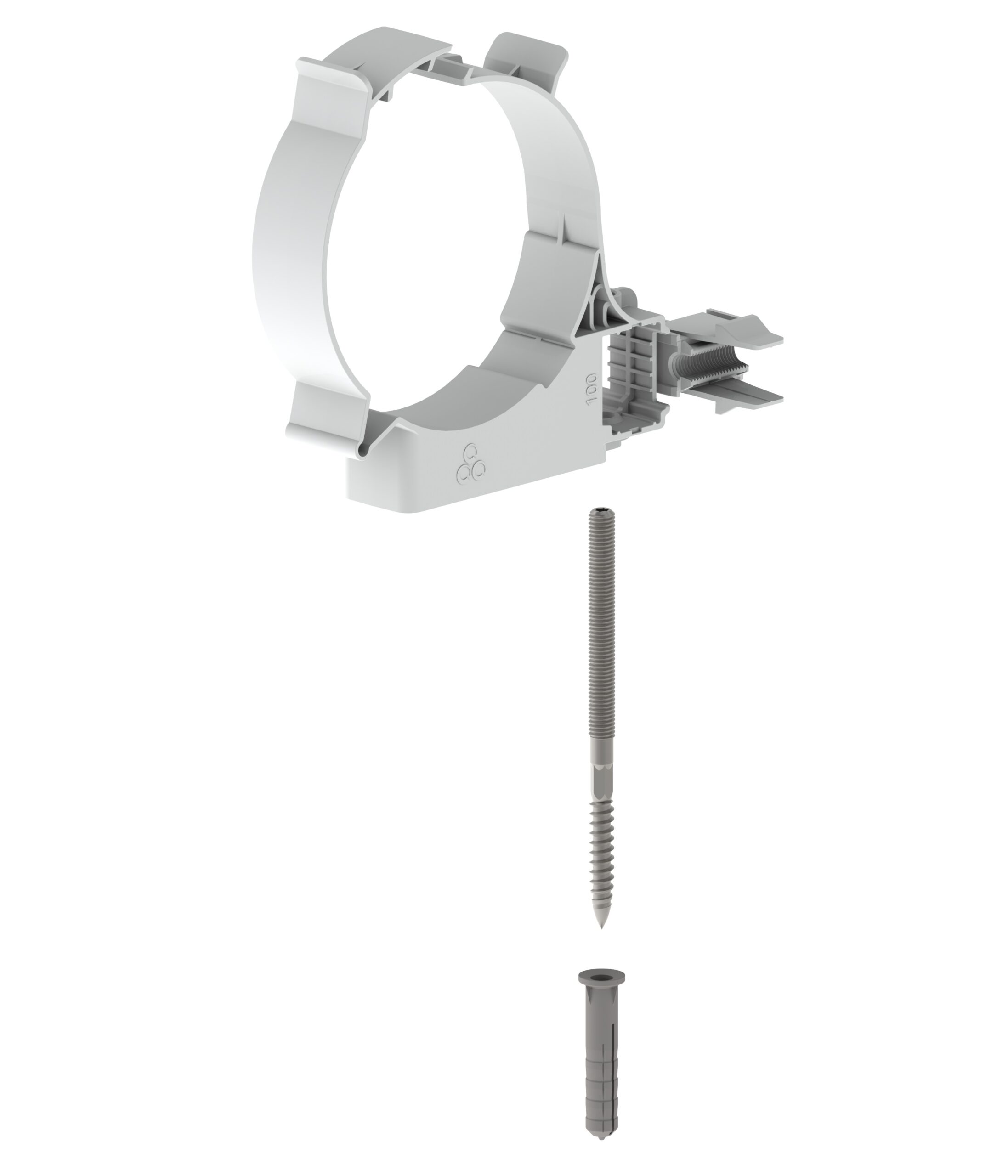
The new bracket fitting

Proper bracket installation is not a detail. It is a fundamental requirement for a safe and well-functioning flue gas discharge system. Rogafa therefore explicitly highlights correct bracket installation as one of the most important parts of the basic regulations.

Together, we make systems safe and functional

Why new bracing matters

A flue gas discharge system must operate safely and continue to do so. That's why Rogafa has developed joint basic regulations: one clear guideline for correct installation. The accompanying checklists will help you quickly verify if your assembly meets those basics.

In the regulations you get to ski emphatic attention. Logically: good bracing holds connections in place and helps prevent parts from shifting or coming under stress. In addition to bracing, Rogafa also mentions fixed points of attention such as Run-off to the unit and making gas-tight connections.
The new bracket fitting

General guidelines for safe bracing

A flue gas discharge system is installed as a single unit. Bracketing is a standard part of this: you fix components so that connections don't loosen and the system remains free of stress. Below are the basic rules from the ROGAFA bracket regulation, summarised for the workplace.

1) Work with the correct bracket and fixing

  • Use only the prescribed brackets and attach them securely to the building using suitable fixings.
  • Is the distance to the building greater? Use an extension set as specified; with threaded rods: keep them as short as possible

2) Secure in the correct place

  • Bracket fixed on or near the coupling: each bend and (where applicable) extension pipe receives a bracket on the coupling.
  • Exception for short appliance connection: if the extension pipes before and after the first bend are shorter than 0.25 m, then place the bracket on the 2nd element after the first bend.

3) Keep to the distances (maximums)

  • Horizontal / inclined: maximum bracket spacing 1 m. Is the distance between fixing brackets on sleeves greater than 1 m? If so, place a non-fixing bracket in between (sliding must remain possible) and distribute the distance evenly.
  • Vertical: maximum bracket spacing 2 m and distribute the lengths evenly.

4) Think about the “endpoints”

  • Always bracket the last section of the connecting pipe before the passage/shaft. If this last section is an elbow, the preceding section can also be bracketed.
  • Every system must include at least one bracket, and the first bracket should be placed no more than 0.5 m from the appliance.