
Check Icon More than 150 years of experience
Check Icon Experts in flue gas and heat pumps
Check Icon Ease of installation & speed
Check Icon More than 2,000,000 homes supplied
Dwellings

Flue gas extraction systems for ground-based dwellings

Burgerhout develops flue gas discharge systems designed from this residential practice: logically constructed, installation-friendly and aimed at minimising risks.

Flue gas extraction systems for ground-based dwellings

Individual systems require careful choices

New build homes are no longer connected to the mains gas network these days, but the majority of existing homes in the Netherlands still are. In ground-based homes, an individual central heating appliance is almost always used. This also means: one flue gas discharge system that is fully adapted to that specific appliance and the situation in the home. When the central heating boiler is replaced after its lifespan, the flue gas discharge system must also be renewed. Flue gas discharge is therefore not a separate pipe, but a total system.

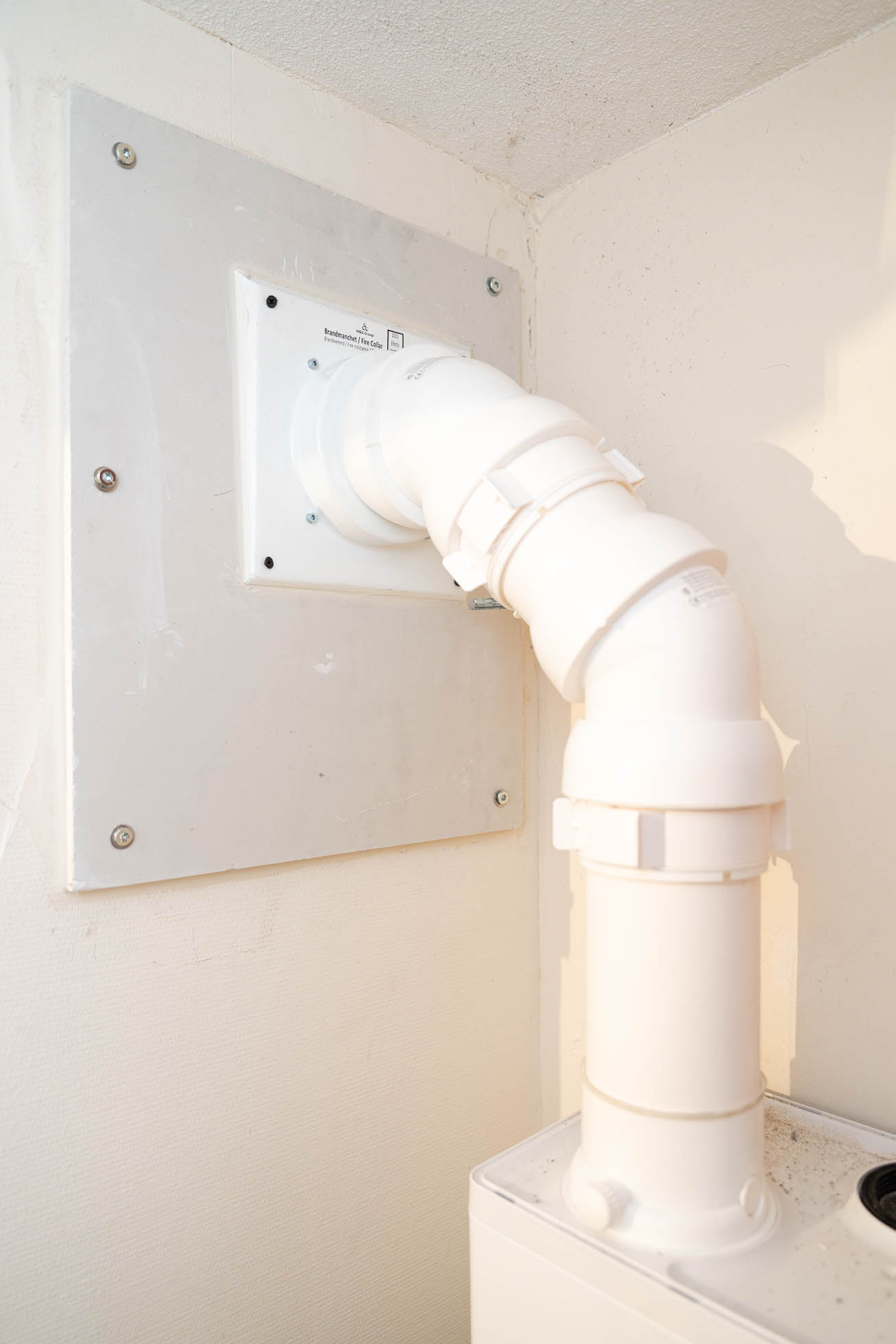
A flue gas discharge system consists of several connected components:

  • Foot connection
  • Pipe run with bends and extensions
  • Fixing and bracing
  • Roof or gable penetration

These components influence each other. The choice of appliance and the available space determine the drainage route, the maximum length and the type of system. At the same time, the chosen system and the throughput impose requirements on assembly, bracing and maintenance.

That's why at Burgerhout you'll find a variety of smart, reliable flue gas exhaust systems for residential buildings that prioritise not only safety but also ease of installation.

Safety and points to consider

Why flue gas evacuation in residential homes requires extra attention

Flue gas discharge in ground-based homes requires extra attention because the installation is often located close to living spaces. A leak, incorrect connection, or faulty assembly can therefore have direct consequences for the safety of residents.

Typical points of attention for flue gas discharge in ground-based dwellings are:

  • Limited installation space around the appliance
  • Short drainage paths with little margin for error
  • Existing shafts or penetrations during renovation
  • Variation in roof pitches and facade situations
  • Combinations of old and new installation materials

Furthermore, correct fixing, appropriate bracket spacing, and adherence to installation instructions play an important role. Deviations from these increase the risk of leaks, combustion disturbances, and the incorrect activation of appliance safety devices.

By working with systems designed for domestic installations, having clear assembly instructions, and adhering to current laws and regulations, the risk of unsafe situations is considerably reduced.

Concentric, parallel, or flexible flues?

The correct choice of flue system for ground-level homes

When it comes to flue gas ventilation in residential buildings, a distinction is made between parallel (single-walled) and concentric (pipe-in-pipe) systems. Both can function safely, provided they are applied and installed correctly. However, in practice, there are clear differences.

Concentric (tube-in-tube)

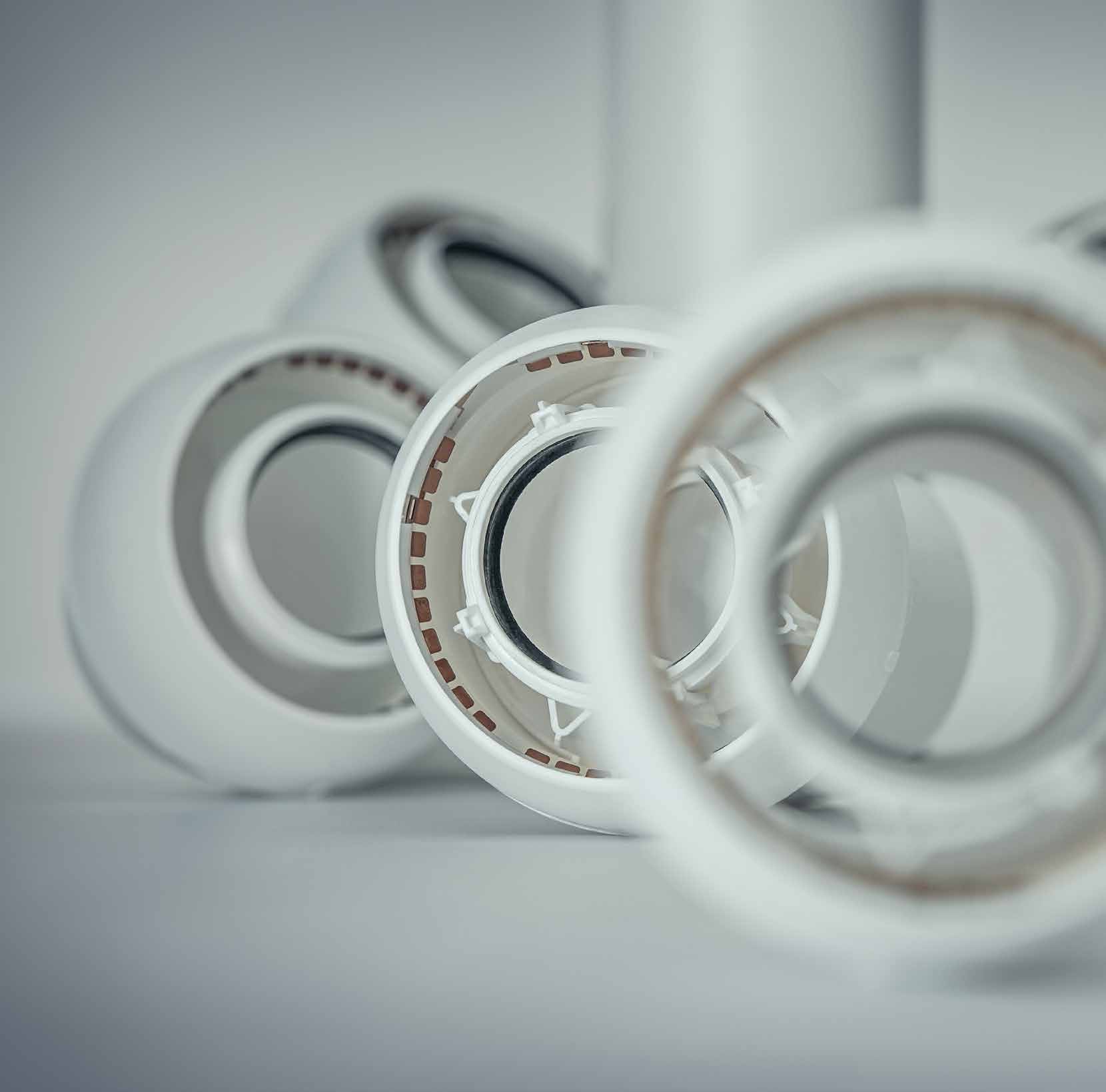
A concentric system uses a smart pipe-in-pipe construction: the inner pipe carries away the flue gases, while the outer pipe supplies the necessary combustion air.

Features:

  • Extra safety thanks to the tube-in-tube construction
  • In case of leakage, combustion gases do not enter the living space, but the air supply.
  • System responds ‘failsafe’ via device security
  • Fewer brackets needed
  • More compact and neater installation

Concentric systems offer greater installation safety in practice, are quicker to assemble, and take up less space. For this reason, they are often used as the preferred solution for residential properties, and ROGAFA also advises the use of concentric systems due to safety.

Parallel (single-walled)

In a balanced flue system, the flue gas exhaust and air supply are two separate pipes between the appliance and the flue.

Features:

  • Universally applicable: Thanks to the loose tubes (usually Ø 80 mm), the system can be deployed very flexibly in a wide variety of structural situations.
  • Suitable for specific situations
  • Requires more discipline during assembly and maintenance
  • More susceptible to installation errors

A parallel system can be safe, but requires accurate assembly according to the instructions.

Flexible systems

Flexible systems are pliable plastic or stainless steel drainage pipes, specially developed for installation in existing ducts.

Features:

  • Ideal for towing
  • Efficient assembly thanks to long lengths and a clever click system
  • Optimal flow and lifespan through smooth inner wall
  • Suitable for both individual homes and collective drainage in multi-storey buildings.

When you want to install a new flue lining in an existing chimney, a small shaft or a hard-to-reach spot, a flexible system is the best choice.